
WELCOME TO INDIGENOUS NOUVEAu
TaanisHii Kiyawow!
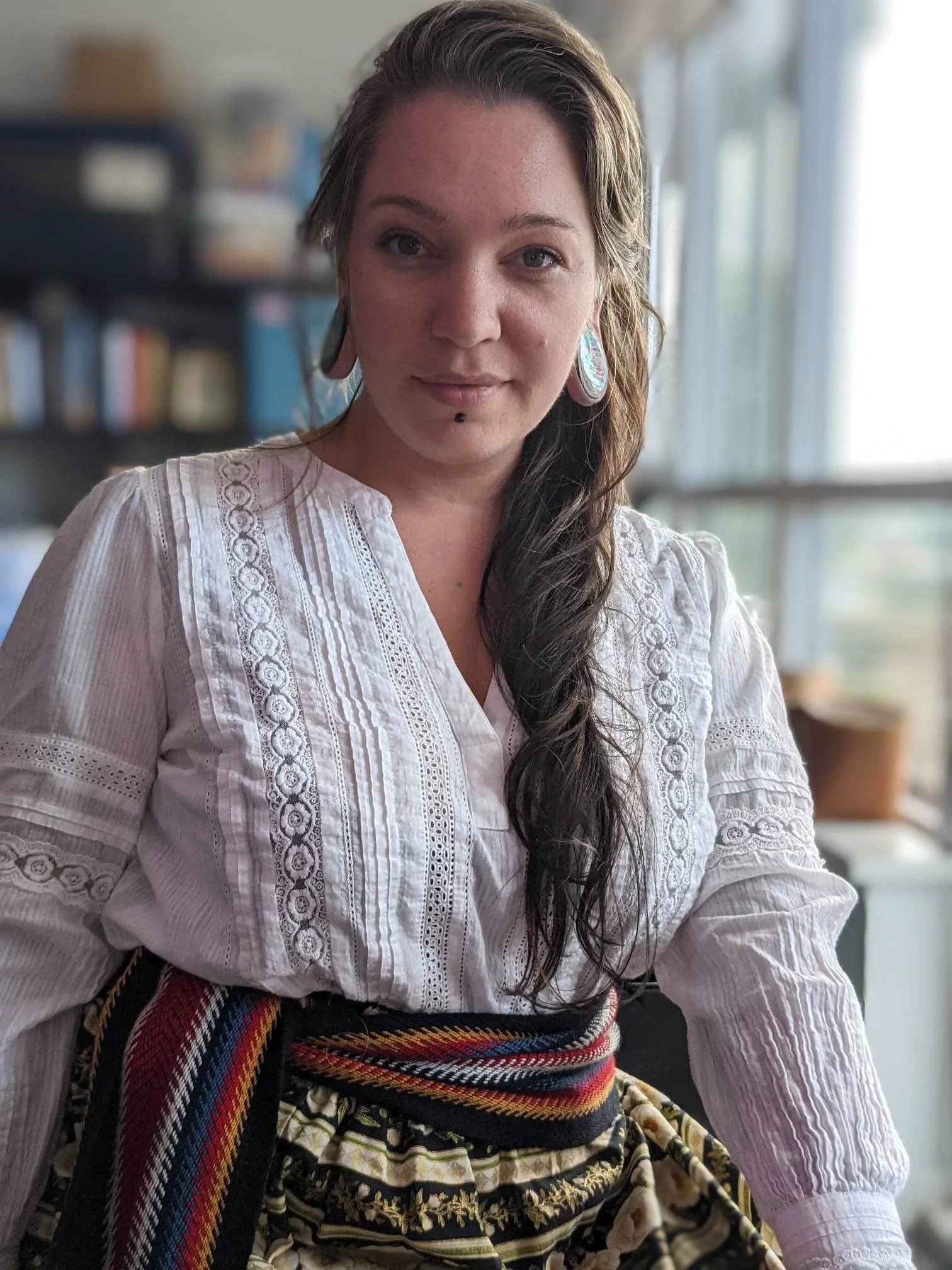
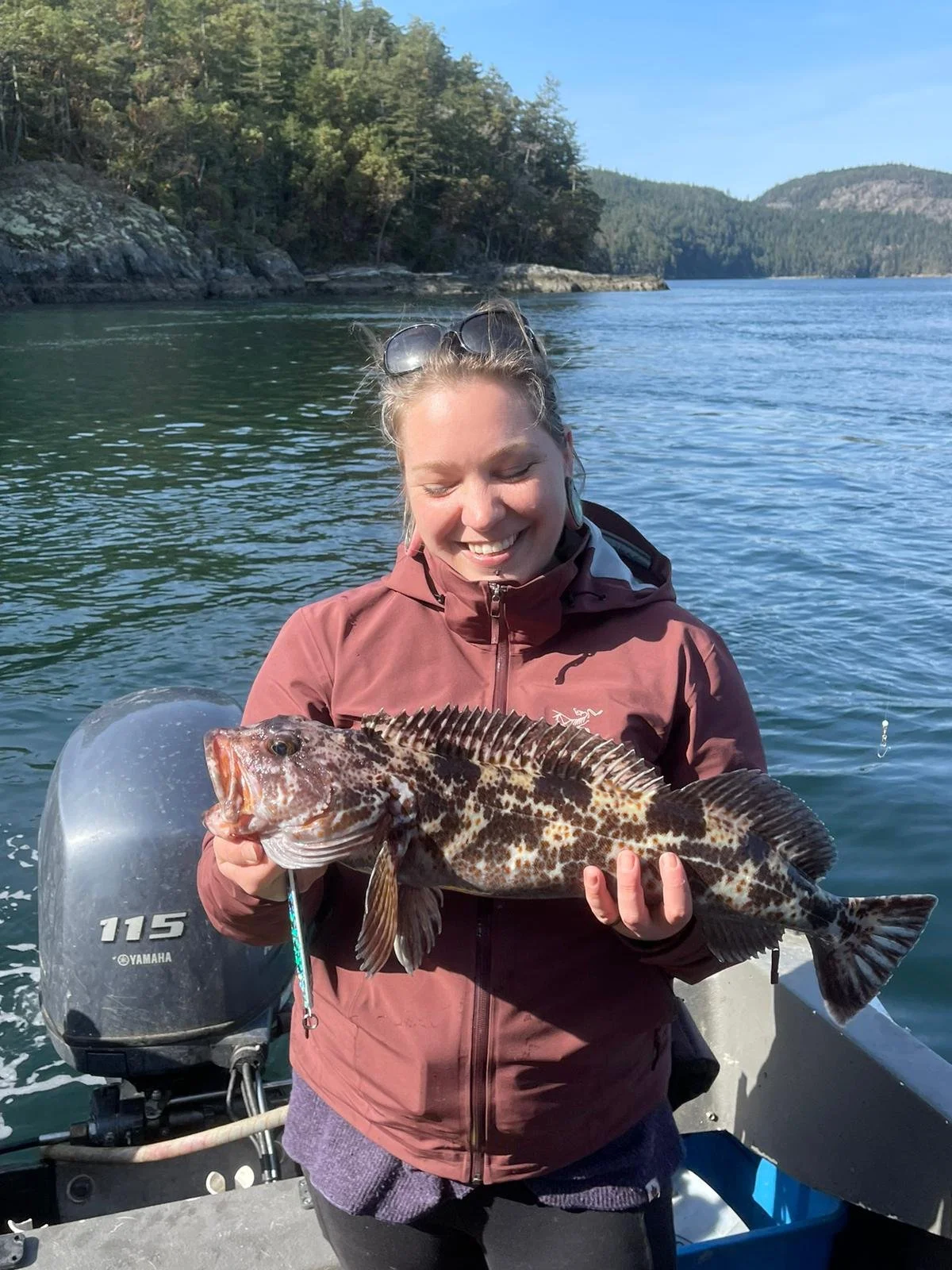
My name is Kaija Heitland and I am a Métis and Scandinavian woman living on Vancouver Island, on the traditional lands of the Cowichan tribes. I belong to the Cowichan Valley Métis Community, and I am a card-carrying Métis citizen of MNBC (Métis Nation British Columbia).
I hunt, gather and participate actively in my community, volunteering and teaching Métis fiddle and traditional art skills but never forgetting the rich Northern European heritage I also belong to. The Métis side of my family comes from the Hodgson lines out of the Red River. My people moved originally from Fort Albany and their occupations with the Hudson’s Bay Company and Northwest Company to the Red River, and then on to the Ottawa River Valley (Lac les Chats) and Thunder Bay where my family flourished, married into the Frost and Haavisto (Sami) family and continuing their land-based practices as trappers, hunters and loggers. They raised their mixed children in poverty but with wholesome, traditional beliefs and practices that respected both their Indigenous and Scandinavian roots. To the best of knowledge, our family never spoke Michif, but English, French, Cree, Oji-cree and Finnish due to their kinship and regional ties.
While I am not only Métis, but a representation of many different peoples, I do my best to respect and honour all of them and the richness of their art and culture and not tokenize any aspect of my heritage.
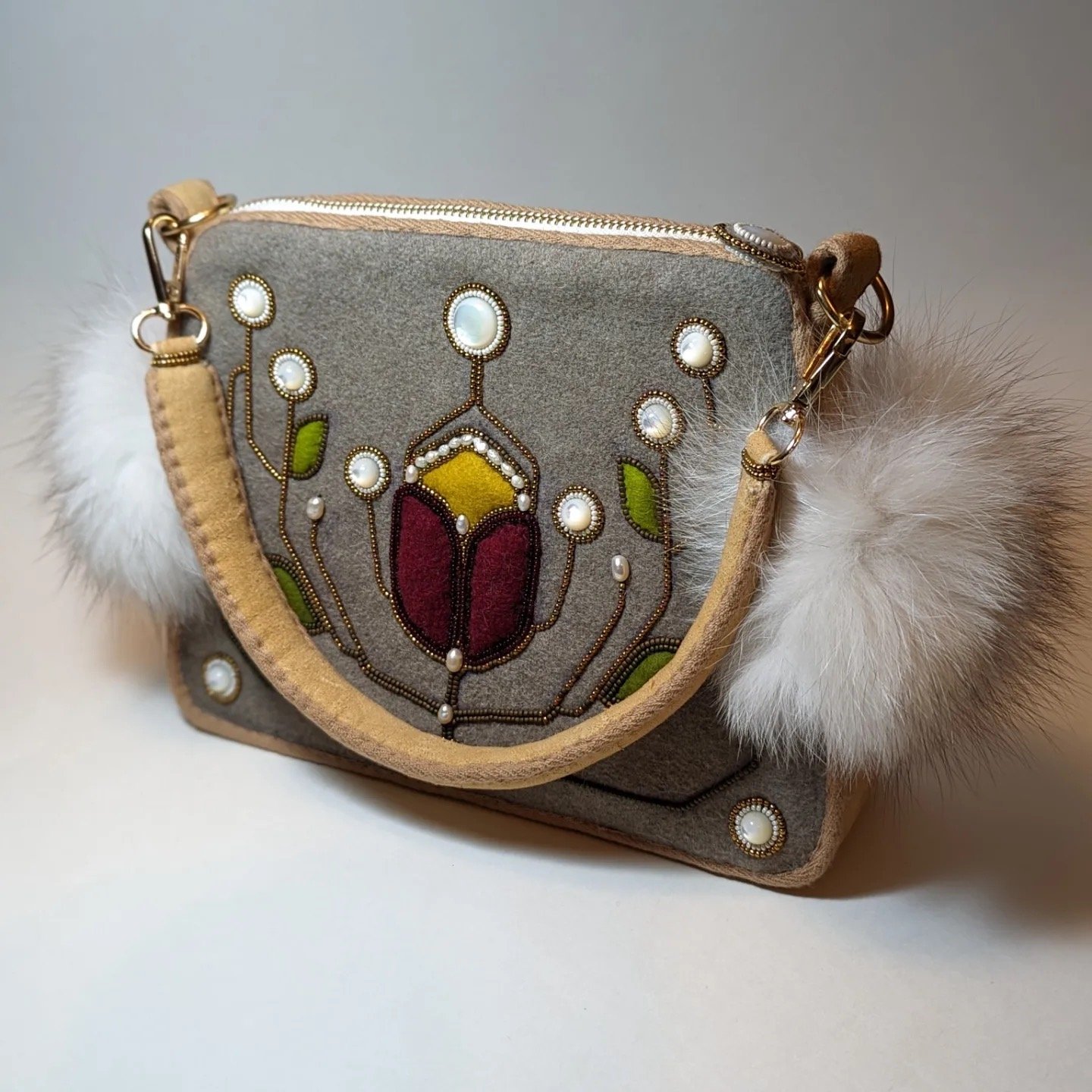
My lineage is also Sami (Indigenous peoples of the Northern parts of Scandinavia and the Steppes), Scandinavian and German, all of whom I draw inspiration from in the work that I do. I try to create an authentic representation of who I am as an individual and as a mix of all of my heritage rather than one specific aspect on its own. I like to think of how I use the language of Métis beadwork and the vocabulary of Scandinavian and Northern European design to tell the story of all the people I come from.
Growing up in my proud Métis and Northern European family, I was born in Thunder Bay and grew up on the Sunshine Coast in B.C., surrounded by hunting, fishing, beadwork and sewing my whole life taught to me by my parents, aunties and extended family. I have been fortunate enough to support myself and my family with the skills I have learned from both cultural communities that I grew up in. I was raised foraging, preserving food and canning as a supplement to our family’s food sources, and my parent’s skills in fishing, gardening, living outdoors and self-sufficiency taught me a respect and gratitude for the land and its resources that I continue to pass on to others.
I have been professionally doing graphic design for 15 years, tattooing for over 18, as well as a lifetime pursuing my traditional skills in beadwork and quillwork and the connections that they have to land-based practices. I have been practicing beadwork and making jewellery for over 30 years.
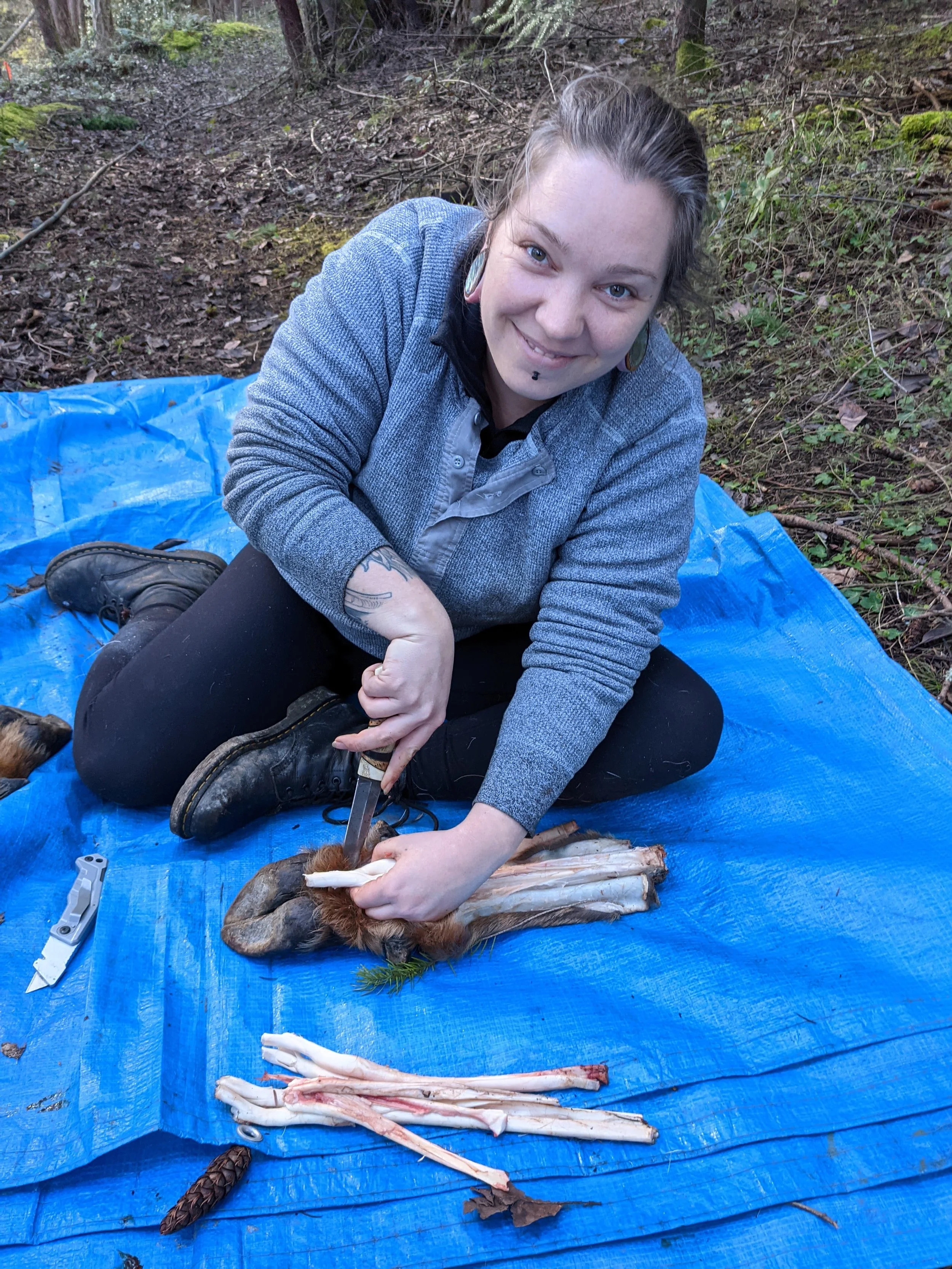
I am also a silversmith and I focus on using teeth and claws, by-products of Indigenous Hunting traditions, to create one-of-a-kind pieces for my clients while highlighting the need for Indigenous voices in the dialogue for conservation and wildlife management and Indigenous food sovereignty.
Being a fiddler since the age of 5, I teach traditional Métis fiddling at our community office in Duncan and we are always looking for new students to join our group! Please contact me at info@indigenousnouveau.com for more information.
Notes on the work I do:
I began my company, Indigenous Nouveau, as a platform to help to facilitate a greater visibility for my communities to showcase our unique beadwork and quillwork patterns, arts culture and history. We are experiencing a renaissance in both our appreciation and our approach to our traditional arts and I find that truly exciting. We, as a culture, are waking up and feeling our strength and vitality and it is wonderful to see that expressed in the art and music being created.
In the past few years, I feel as though I have found my true calling in education, sharing and in arts communication. Currently, my main focus has been teaching traditional land-based arts, giving instruction on beadwork, quillwork and the teachings of the Ribbon Skirt and to see them as vehicles for the authentic reclamation of identity. I teach my work widely and without prejudice, and often open my classes to non-Indigenous participants to help strengthen kinship ties and ally-ship, but reserve culturally specific teachings to my community.
I actively make an effort to not take up space or opportunities belonging to First Nations or Inuit Individuals, and do not apply for Non-Métis or non-widely-Indigenous programs, grants, contests or contracts. It is a small effort on my part to ensure that the resources that I have access to have been specifically allocated to the preservation, sharing and development of Métis material culture and do not contribute to the reduction in opportunities for First Nations or Inuit artists and people.
Ki’nanaskou mitinowow!
Maarsii,
Kaija
Artist Statement and Expanded CV
2022 Graphic Design Pricing and Protocol
For updates on my current projects, classes and beadwork kits, please follow my work on my Instagram @indigenousnouveau and Facebook, www.facebook.com/IndigenousNouveau. To see my jewellery, please visit my Instagram @bythethorne.
Indigenous Nouveau - The Story
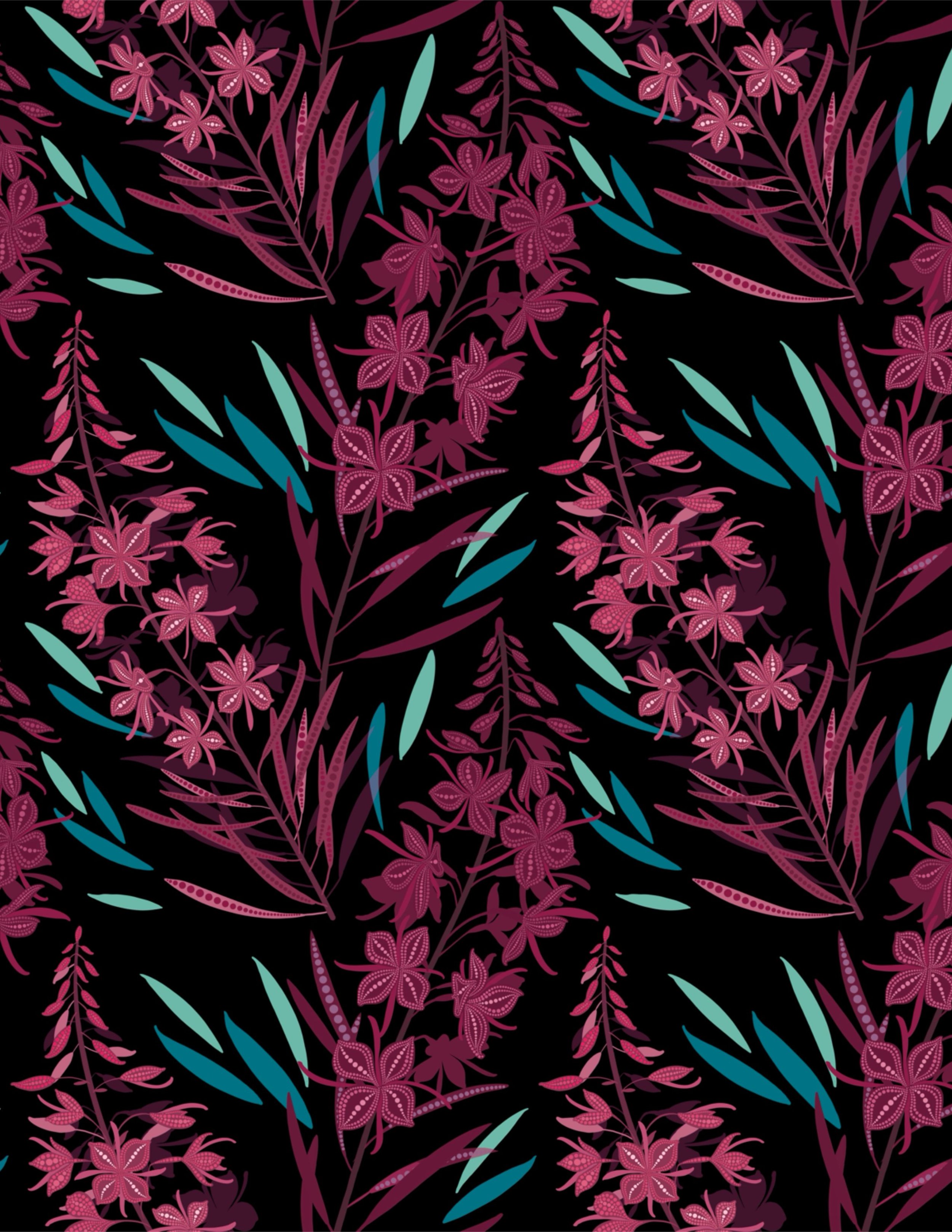
The Art Nouveau movement of the late 1800’s was aimed at modernization, but more than that, reviving historical art styles and techniques that had fallen out of fashion. It was a resurgence. A Renaissance.
This is the premise of Indigenous Nouveau, a concept for a Métis Arts movement celebrating the presence and artistic diversity of the Métis in Western Canada. We are experiencing a rebirth. Our culture is undergoing a revival of in our art and traditions, inside and outside our community.
The work that I do, the beadwork I create and the fabrics I design are for everyone, and reflect modern Métis culture that finds itself in a new place it is yearning to find strength in its artistic identity.

Now more than ever, it is so important to find common threads that connect all of our communities whether they are Indigenous or settler, and regardless of culture and race. We all live here, and can only find a way through by focusing on our strengths and similarities, rather than our differences.
The teachings of the ribbon skirt is something I strongly focus on to help to illustrate the connections between the Métis, First Nations and Settlers. We all share this piece of clothing though we all come to it from different perspectives. It is found all over Turtle Island (North America.)
The design for the modern Ribbon Skirts comes from many sources. The long skirts and modern materials from Europe that our European Ancestors brought mixed over the generations with the traditional t-dress and buckskin skirts of the Plains and new and old designs, colours and materials created this iconic contemporary representation of mixing cultures. We share so much history with each other and so many commonalities. Through my work, I hope to bring awareness to the need for reducing lateral violence and focus on the aspects of all of our cultures that bring us together instead of separate us.
Please stay tuned and check in on The Journal Page to see updates about the projects that I’m able to do in our community now with your support. If you have a special community, school or public project that you would like me to participating in, please contact me and I would happily discuss your ideas. If you’re an Indigenous entrepreneur and you would like to reach out or if you need assistance with your business, please send me an email via the form on the contact page.
If you are interested in learning more about the Teachings of the Ribbon Skirt and to learn how education for everyone on Indigenous traditions help to bring us closer to our common goals, please visit www.theribbonskirtproject.ca
Note: The writing below is in my own words, and may not necessarily represent the individuals in my community or their opinions. While funding of some of my projects in the past have come from Metis Nation British Columbia, The Gabriel Dumont Institute, Metis Nation Manitoba and I was born in Ontario, I do not necessarily represent or reflect the political views of any of these organizations and specifically not those of Metis Nation Ontario. I speak for myself and my own views and experiences.
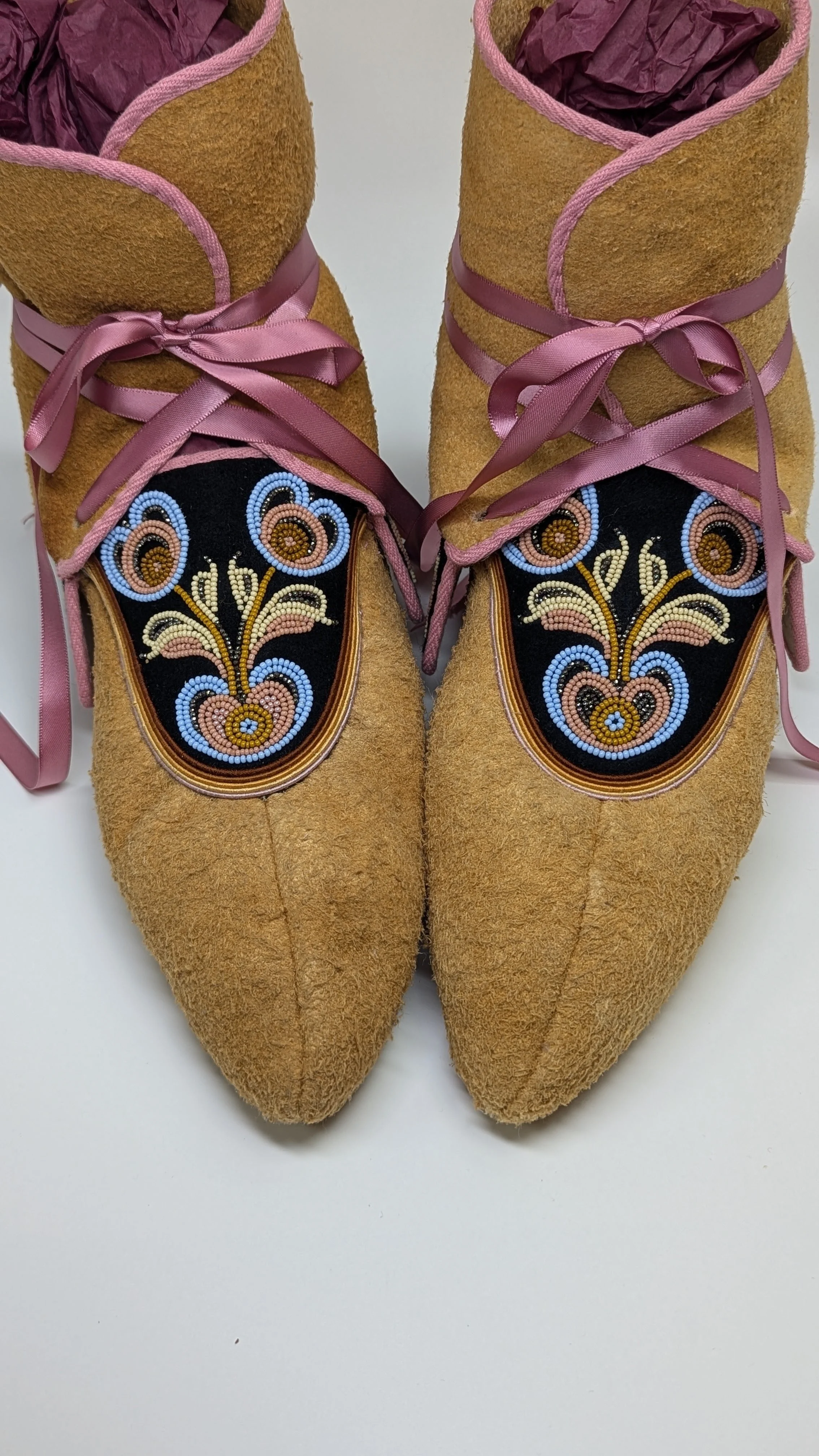
The Métis make up around 33% of the current Indigenous population of British Columbia, totalling more than 90,000 recognized members, though our numbers are not represented in the current Indigenous conversation in art, culture or education here. Understandably, this is because we are a people outside of our homeland, with a few exceptions of landed communities. We are here as guests of the First Nations whose land we work and live on.
It is a passion of mine to bring a little bit of my culture to the forefront through my art and teaching, and using land based practices to strengthen our community and kinship bonds.

For the Métis, this under-representation has led to a wide-spread misunderstanding of what Métis culture actually is and what we represent.
We are a distinct, vibrant community of people who are descended from both European and First-Nations people with our own music, languages, stories and history, living throughout the Red River, Rupert’s Land and many other wide-spread Metis communities. We celebrate all of our lineages and find common culture and roots with those we find kinship with. Our fur-trading ancestry helped build and carve out the French and British domination of North America, making us both colonizers and the colonized.
It is important to understand, for Indigenous and non-Indigenous alike, that our First Nations ancestry on its own is not what makes us Indigenous or unique. The value of us as individuals and our culture does not hinge solely on First Nations ancestry, and varies throughout families as many of us come from different historical communities. We are Indigenous to this place because our people and culture were created here. We do not exist anywhere else in the world. This is what makes us Indigenous but we also share ancestry with our First Nations cousins.
This is a difficult concept that many may struggle with, but we find strength, truth and reinforcement in our communities, and our knowledge of where we come from.
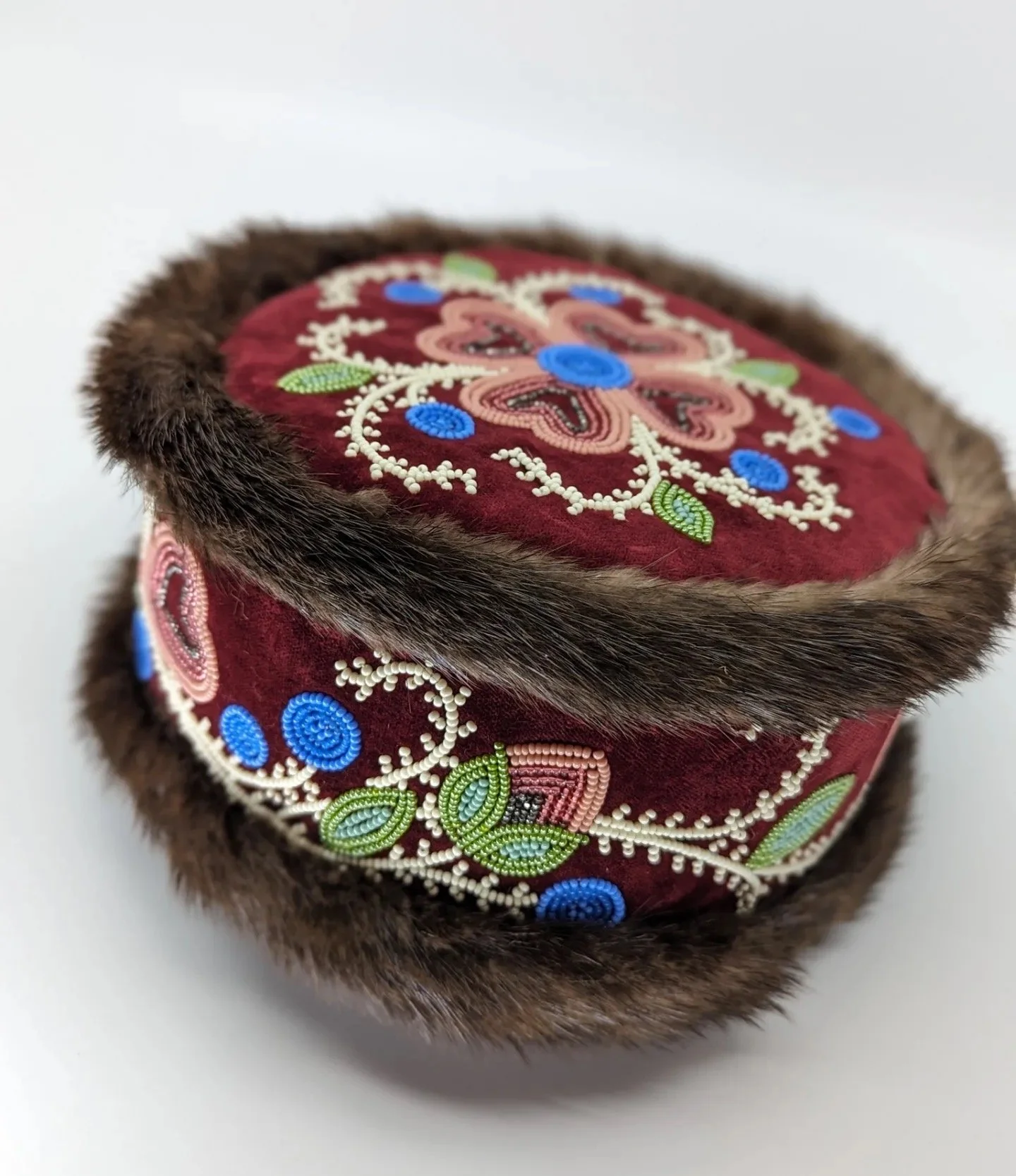
We are both the old and the new, meaning that we bridge a gap between the past and the present, which can make us essential to the Indigenous dialogue in this country as mediators, facilitators and allies when we are invited to, not necessarily as representatives. It is important that we know our role and do not overstep into spaces that should be reserved for First Nations and Inuit Individuals and that we do not speak for them. Our role exists as representatives of the environment and lands that created us, the animals that clothed and fed us, and as allies and supporters of the First Nations that we share culture and kinship with.
Our membership is voluntary which means that we have to want to participate actively in our communities and culture. We must pursue our culture, our roots and seek actively recognition within a community. These are the things that make us strong.
I love reading and hearing stories of our lineage, arts and history but there is a dissonance for me, as I did not grow up in the Métis homeland, the Red River Basin and I seek artistic guidance from all of my roots. I wanted to make mywork relevant to the new, 21st century Métis culture that I belong to, encourage others to have a more holistic approach to their identity and be a representation of a mixed and displaced people in a new land.
Tradition, iconography and symbolism are essential to representing ourselves as Métis, and I believe that a modern approach is an appropriate way to represent our journey here from our home lands. Although we are fiercely and proudly Métis and descended from long lines of tradition keepers with a distinct culture, in a new place we become a new people influenced by the plants, animals and pre-existing cultures of that new place that we call home. Our Arts and culture should reflect the changes that we have experienced as a people in our migration from our original homeland, because for me, without innovation and evolution, art dies.
This is Indigenous Nouveau.
A rebirth, a resurgence and a celebration of those taking our Métis arts and Culture into the future. This is an opportunity to show our cultural strength and individuality, and reinvigorate our social bonds with other Indigenous nations through art and reinforcing shared culture and historical ties.